
1. Why You Replay The Same Memory At Night
When everything goes quiet… and your mind gets loud.
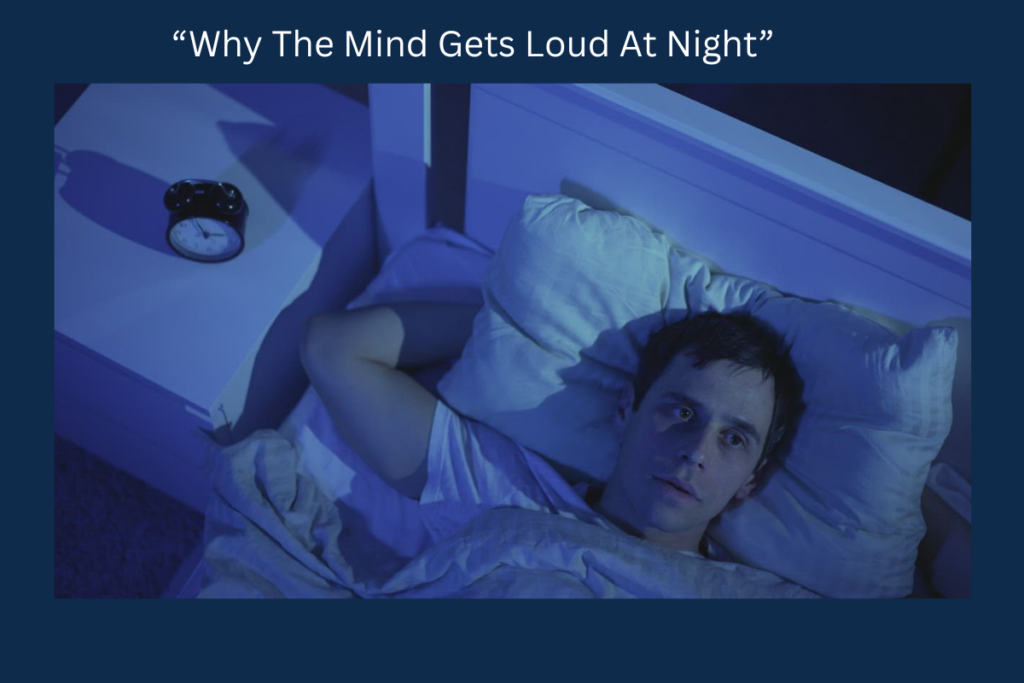
If you’ve ever laid in bed exhausted — desperate for sleep — only to find your brain has to replay the same memory at night like a stuck recording, you’re not alone.
It can feel confusing.
You got through the day fine. You were distracted. Functional. Busy.
And then… night comes.
Silence.
Stillness.
And suddenly your mind won’t switch off.
Let’s gently unpack what’s actually happening.
🌙 Why The Brain Processes Trauma When Things Go Quiet.
During the day, your brain is task-focused.
It’s dealing with emails, conversations, traffic, noise, responsibilities.
Your survival system stays occupied.
But at night,
The external world quietens.
There are fewer distractions.
Your brain finally has space to process unresolved material.
And here’s the important part:
The brain is wired to process unfinished emotional experiences when it detects “downtime.”
If something traumatic or emotionally charged was never fully processed, your mind may try to revisit it when it feels safe enough to do so. Thats why you Replay The Same Memory At Night.
Night equals:
- Reduced stimulation
- Lower external threat
- Increased internal awareness
Unfortunately, that processing doesn’t always feel gentle.
When everything goes quiet… and your mind gets loud.
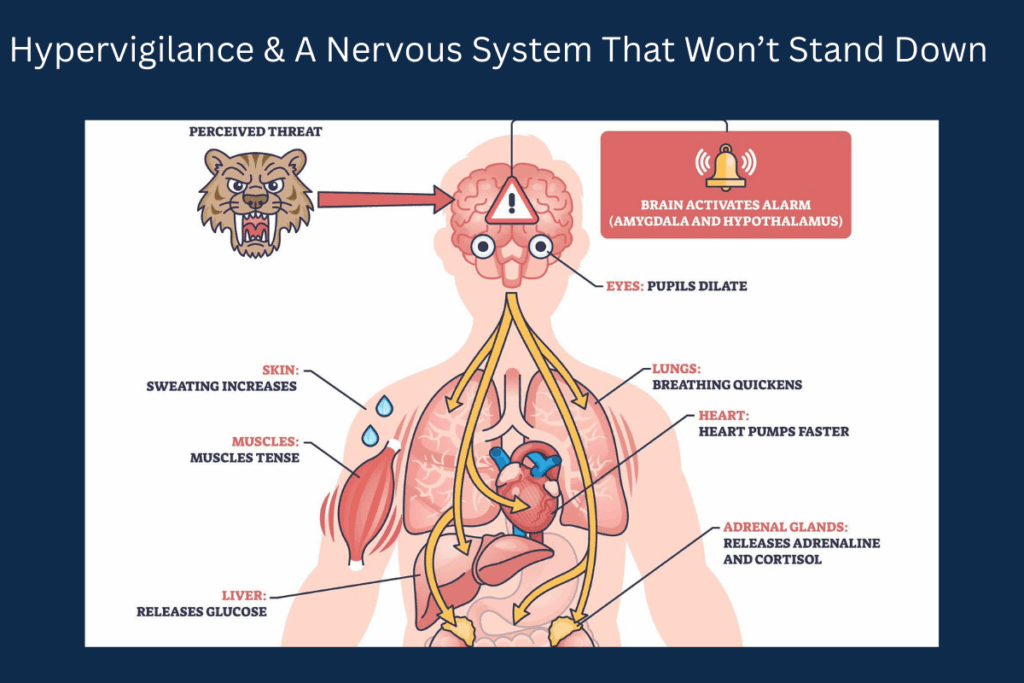
🔥 Hypervigilance & A Nervous System That Won’t Stand Down.
If you’ve experienced trauma, your nervous system may have learned one core lesson:
Stay alert. Don’t drop your guard.
Even in a safe bedroom, your body can remain subtly activated.
This is called hypervigilance — a state where your nervous system scans for threat even when none is present.
At night:
- Your heart may beat a little faster
- You may feel “on edge”
- Small sounds feel amplified
- Your body struggles to fully relax
So when a memory surfaces, like when when you Replay The Same Memory At Night, your body reacts as if it’s happening now.
The replay isn’t just mental.
It’s physiological.
And that’s why it feels so real.
🧠 Why Distraction Works In The Day — But Not At Night.

In the daytime, distraction is easy:
- Conversations
- Work
- Phone scrolling
- TV
- Tasks
- Noise
Your thinking brain (prefrontal cortex) stays busy.
But at night, those distractions fall away.
The emotional brain — especially the amygdala — has more influence when:
- You’re tired
- You’re still
- You’re not cognitively engaged
Fatigue also weakens your rational control.
So the same memory that stayed quiet all day suddenly feels overwhelming at 11:47pm.
You’re not “weak at night.”
Your cognitive guard simply drops.
😑 Why “Just Relax” Doesn’t Help.
If someone has ever said:
“Just relax.”
“Don’t think about it.”
“Calm down.”
…you’ll know how unhelpful that feels.
Relaxation requires a nervous system that feels safe.
But, if your system is activated, telling yourself to relax can create more pressure and can make you Replay The Same Memory At Night ?
It becomes:
- “Why can’t I switch off?”
- “What’s wrong with me?”
- “Why am I still thinking about this?”
Which adds frustration.
Which increases activation.
Which keeps you awake.
It’s not a failure of willpower.
It’s a nervous system loop.
🔁 Why The Same Memory, Again And Again?
The brain replays experiences that feel unfinished.
Traumatic memories often aren’t stored like normal memories.
They can feel:
- Frozen in time
- Sensory-heavy
- Emotionally intense
- As if they’re happening in the present
Your brain isn’t trying to torture you.
It’s trying — clumsily — to resolve something that hasn’t fully completed.
Unfortunately, to replay the same memory at night doesn’t always consciously resolve it.
It often just reactivates it.
💬 A Gentle Note On Treatment
Many people assume trauma therapy means repeatedly retelling the event in detail.
For some approaches, that’s true.
But not all trauma treatments require you to relive everything over and over.
Some methods work by helping the brain process and “file” the memory properly — without repeatedly talking through every detail.
For people who dread the idea of recounting the story again and again, this can feel like a relief.
The goal isn’t to force you back into the memory.
The goal is to help your nervous system realise:
It’s over.
You survived.
You’re safe now.
🌅 If This Is Happening To You
You’re not broken.
You’re not dramatic.
And you’re not “just bad at sleeping.”
To Replay The Same Memory At Night is common in people who:
- Experienced trauma
- Live with high stress
- Carry unresolved emotional experiences
- Stay busy all day and collapse at night
Your brain is doing what brains do when something feels unfinished.
The good news?
Loops can be interrupted.
Processing can happen safely.
Sleep can return.
If you’d like, I can also write:
- A short calming night-time script you can read before bed
- A grounding technique specifically for 2am wake-ups
- Or a version of this blog adapted for veterans / blue light workers for your Blue Lights & Battle Scars Community
If these night-time memory loops feel familiar, you don’t have to keep managing them alone.
There are ways to help the brain process what happened — gently and without repeatedly retelling the event.
If you’d like to take a first step and allow you not to Replay The Same Memory At Night ? I offer a focused Rewind Therapy session starting at £97, designed specifically to help the nervous system stand down safely.
👉 You can book a confidential session here:
https://positivewaysuk.com/bookings
4 Comments